
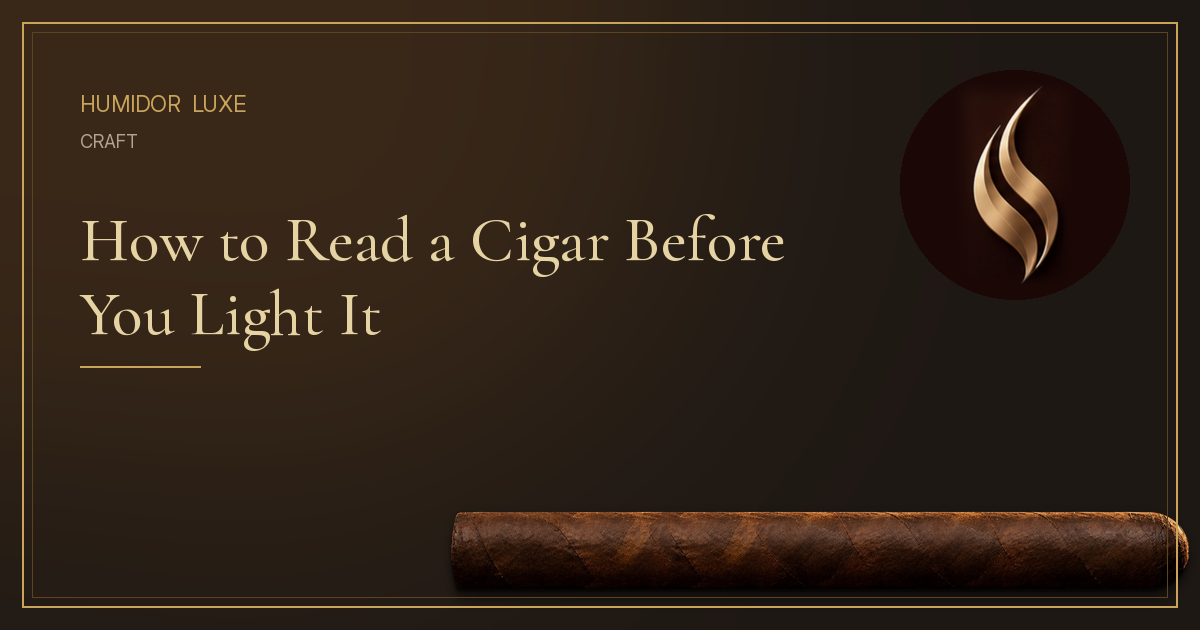
A cigar tells you a good deal before it ever meets a flame. Learning to read it is the first pleasure of the ritual and the best defense against a disappointing smoke.
1. The wrapper
Look at color and sheen. Wrapper shades run from pale claro through colorado to dark maduro and nearly black oscuro. Darker wrappers often (not always) suggest sweeter, earthier notes. A healthy wrapper has a faint oily sheen; dullness and flaking can signal dryness.
2. The seams
Follow the spiral of the wrapper from foot to head. Tight, even, nearly invisible seams speak of a careful roller. Veins are natural, but prominent, rough veins may affect the burn.
3. The feel
Roll the cigar gently between thumb and finger along its length. It should feel consistently firm with a slight give. Hard spots can mean a plug; soft spots can mean underfilling and a hot, fast burn.
4. The cap and the foot
A well-applied cap sits smoothly, often in layers. At the foot, look at the filler: you may see the different leaves of the blend arranged in folds.
5. The cold draw
After cutting, draw through the unlit cigar. You should feel gentle resistance, like sipping through a straw. You may also taste hints of what's to come: hay, cocoa, spice.
Record what you learn
The point of reading a cigar is to remember it. In Humidor Luxe, mark a cigar as smoked, rate it and add a note. After a season you'll know which wrappers, sizes and makers you truly love.
New to the shapes? Begin with the vitola field guide.
Next in the Journal: Connecting a SensorPush Sensor to Your Humidor